
East Cleveland Cleanup of More than 250 Tons of Trash Offers Healthy Start for Residents, Opportunity
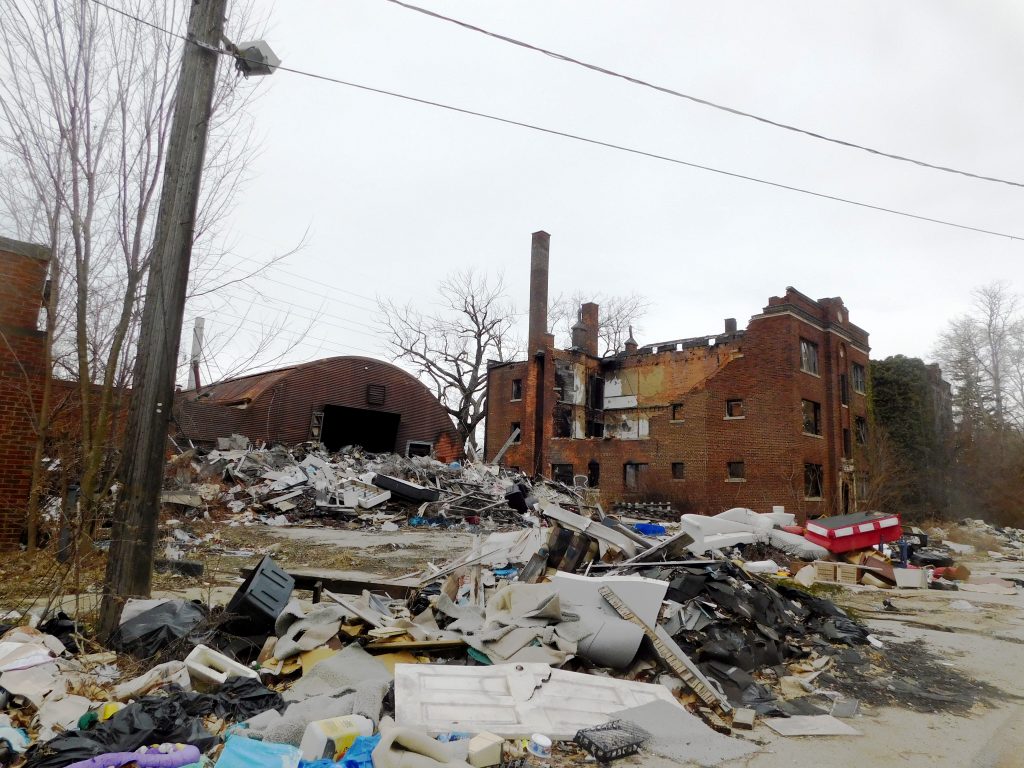
Ohio Environmental Protection Agency (OEPA) completed a significant environmental cleanup at Elderwood and Chapman in East Cleveland last year, removing more than 250 tons of illegally dumped trash and debris from the site. To put it at a human scale, this work is like removing 125 cars or 50 Elephants. The effort required coordinated crews, heavy equipment and multiple truckloads to restore the property and remove what had become a major dumping ground.
Efforts to restore that corner of the city have been ongoing for nearly 10 years, with Cuyahoga Land Bank leading the charge on demolishing abandoned buildings one at a time, while the OEPA has managed the illegally dumped trash alongside Cuyahoga County and its Solid Waste District. Also, part of the team, the County Sheriff deals with security to prevent more illegal dumping from happening. Projects of this magnitude require substantial resources, partnership, and coordination. Collaboration on this effort was especially important.
Illegal dumping sites like the one at Elderwood and Chapman rarely appear overnight. What often begins as a few discarded items can quickly escalate once a property appears neglected or unmonitored.
Urban planners refer to this pattern as the contagion effect. Visible disorder, such as trash piles, abandoned structures or vandalism, signals that a space is not being actively cared for. Additional dumping and deterioration often follows. Over time, the presence of visible blight can discourage investment, lower property values, and erode residents’ confidence that their neighborhood is being protected.
“Cleaning up a site like this is incredibly intensive,” Land Bank Director of Community Stabilization Adam Stalder said. “Removing 250 tons of trash shows just how severe illegal dumping can become when it’s allowed to spread. These sites don’t just appear; they grow over time because people see a property that looks abandoned. The scale of this cleanup shows both the toll that blight can take and the importance of stepping in before it spreads further.”
Beyond aesthetics or property values, large trash accumulations also present serious public health concerns.
Improperly managed waste can contaminate soil, water and air and expose nearby residents to harmful pollutants. Decomposing waste can release gases that irritate the respiratory system and contribute to respiratory illness. Chemical runoff from dumped materials can contaminate groundwater or nearby waterways.
Dump sites also create environments that attract rodents, insects, and other pests that can carry disease, increasing risks to surrounding neighborhoods.
Studies of communities living near unmanaged waste sites have identified increased risks of respiratory problems, headaches, gastrointestinal illness, and other health effects tied to exposure to pollutants or disease associated with waste accumulation.
These health impacts are reason enough to address environmental conditions that are central to community development. A healthy neighborhood is not defined only by housing or infrastructure; it also depends on safe physical environments that support the health of the people who live there. When piles of trash accumulate on vacant land, they undermine those conditions and can directly affect the wellbeing of residents.
Across the United States, illegal dumping is a widespread problem. An estimated 1.5 million tons of trash are illegally dumped each year, placing significant financial and environmental burdens on communities trying to remove it.
For Cuyahoga Land Bank, tackling these conditions is core to its mission.
“Our collaborative work is about removing the conditions that make healthy living harder for residents,” said Joan Chase, Cuyahoga Land Bank Chief Operating Officer. “When illegal dumping takes over a property, it affects more than the land. It impacts public health, community pride, and people’s overall sense of place. Addressing sites like this directly aligns with our mission to remediate conditions that are averse to healthy living and help restore the environment that neighborhoods deserve.”
The cleanup at Elderwood and Chapman represents more than a one-time removal effort. It reflects an ongoing commitment – shared by the Land Bank and Cuyahoga County – to address blight and restore properties so they can once again contribute positively to their communities.
For East Cleveland residents, the removal of 250 tons of illegally dumped debris is not just a cleanup. It is a visible step toward reversing the cycle of neglect and reinforcing that their neighborhood matters.
